8 May 2008

In My Father's Den

A film by Brad McGann

When his father dies, Paul Prior, a battle weary war photographer, returns to his remote New Zealand home to face the past he left behind seventeen years ago. Reluctantly re-visiting the dilapidated family property, he discovers the old den, tucked away in the equipment shed. It belonged to his father, Jeff, who away from his puritanical wife Iris, had secretly harboured a love of wine, literature and free-thinking philosophy. When Paul as a child had accidentally stumbled upon this wondrous book-lined universe, he had been included in his father's secret, promising never to tell anyone about it.

Against his better judgement, Paul befriends the daughter of his first girlfriend, the enigmatic and feisty sixteen-year-old Celia, who hungers for the world beyond her small town. However, the friendship is condemned by members of both their families and when Celia goes missing, Paul is immediately blamed for her sudden disappearance. As the violent and urgent truth gradually emerges, Paul is forced to confront the family tragedy and betrayal he ran from as a youth, and to face the grievous consequences of silence and secrecy that has surrounded his entire adult life.

A haunting, atmospheric and intricately layered mystery, set against the stunning landscapes of New Zealand.

— —

Hope
by Celia Steimer

Hope, her mind is a graveyard, her heart is an island. She and I are not good friends but I have known her all my life. She sits in my belly, hollow and distant, though her whispered words of encouragement will never comfort me. I'm onto her tricks, her false promises. Go away I tell her, I'm busy today, I've got things to do. But this aquaintance never knows when to leave. It's not a question of why she befriended me in the first place, it's more a question of why I chose to let her stay.

— —

The Day The Tide Went Away
by Celia Steimer

One day, in a town at the edge of the world, the tide went out and never returned. The sea just left without warning. At first, people were little more than puzzled. They continued to gossip and fight over the same old things. But soon a silence began to permeate the township. A desert of unbelievable magnitude was forming before their very eyes. Weeks passed and there was still no sign of the ocean. The people grew worried. It was decided to send a small group to search for it, in the hope of bringing it back.

As the days went on, more and more people went looking. The people searched far and wide, but the ocean had vanished without a trace. The quiet land, once bountiful, had become hard and unyielding. Then a shape appeared on the horizon. Through a blaze of heat, the people saw what looked like tumbling water rolling towards them. A wave of excitement passed through the town, as they anxiously watched the ocean return. But as it grew closer, the shape began to alter and mutate. What looked like tumbling water, was in fact wild horses. Everywhere they turned, they saw horses drawing closer and closer. Their excitement turned to fear, and their fear became panic, for it seemed that nothing could stop their advance – which, as the ocean's disappearance, had come without warning. But then no one, not even for a moment, had stopped to question why the ocean had left in the first place.

The people had no choice but to trust that the horses would lead them to their ocean. Without reins or saddles, they rode the horses across the barren land. But the ocean had disappeared for good. And the people, together, alone, had no choice but to face each other in their loss. They made a home for themselves in a new environment, although one that had changed forever. They learnt to live in the space the ocean had left, although it lingered in their dreams.

3 May 2008

Perfect Strangers

A TV mini-series by Stephen Poliakoff

If you dig hard enough there are at least three great stories in any family. When Daniel attends an extraordinary family reunion with his parents, he discovers a world he hardly knew existed. Seduced by the glamour of this new world, Daniel adopts the role of go-between for his glamorous Aunt Alice and his cousins Rebecca and Charles. But even the most honourable of intentions have the potential to go disasterously wrong.

A vivid and captivating tale in which Daniel meets his wider family – people whom his father had detached himself from many years before. One by one Daniel listens to each person's story, becoming obsessively drawn into every new experience whilst slowly building a picture of the family's past. It is a picture full of amazing and very beautiful stories but also of pain and guilt. Eventually Daniel discovers himself in that picture too, as a young child in fancy dress at a children's party long ago. As distant memories are stirred for the first time in his life, he becomes even more compelled to uncover his own part in the story. The complex interweaving of each separate story finally brings acceptance, understanding and peace to each member, and reconcilliation to the family as a whole.

Developing themes explored in Poliakoff's earlier work, Shooting the Past, Perfect Strangers captures the magic and wonder surrounding such things as war stories, mysterious photographs, dark secrets and hidden stories from family trees.

30 April 2008

The Beautiful Country

A film by Hans Petter Moland

Bui doi – "less than dust" – is a slur aimed at Vietnamese children with American fathers. The Beautiful Country, set in 1990, relates the odyssey of a young "bui doi" with one impossible dream, to be reunited with his birth father, an American GI who disappeared one day without trace.

Binh is a young man of unusual height and facial features marking him for contempt. He  lives in a village with his foster family who barely tolerate his presence. When his foster mother begrudingly reveals that his birth mother is alive and living in Saigon, Binh packs up his few possessions and journeys to the city. His one link to family life, and clue to his mother's whereabouts, is a photo of a smiling American and pretty young Vietnamese woman holding a baby, standing before a distinctive shop front. Asking around, showing his photo, stoically accepting of rude rebuffs but persevering, Binh finally locates a young boy, Tam, who has heard tell of a very tall big brother.

After an emotional reunion with his mother, who helps him escape Vietnam, he endures a Malaysian refugee camp, survives a brutal ocean crossing in a freighter, and indentured servitude with a human-trafficking ring. Throughout his long journey Binh confronts unimaginable hardships yet manages to keep hope, humanity and a generous spirit alive as he searches for a connection with his long-lost father. His quest eventually leads him to a remote Texas ranch and a redemptive reunion, the key to finally unlocking the mysteries of his past.

A sensitive, unpretentious and deeply moving story about the human soul's ability to sustain life through hope.

27 April 2008

The Road Home

A film by Zhang Yimou

For the first time in many years businessman Luo Yusheng drives to Sanhetun, the village in northern China where he was born. The district mayor having called him to tell him that his father died suddenly, Yusheng is rushing back to be with his mother. He finds her grief-stricken, keeping a sad vigil outside the decrepit village schoolhouse. But she is adamant that her husband's funeral will follow age-old local customs, even if they are rarely observed nowadays. She will personally weave the funeral cloth on the village loom, and local men must carry the coffin from the hospital back to the village.

The mayor hopes that Yusheng will persuade his mother to be more 'reasonable' – such as to allow the coffin to be driven rather than carried. He fears that even if he could find men willing to carry the coffin many miles through the winter snows, there would not be enough of them. Most of the young men of Sanhetun, like Yusheng himself, have left the village to work in faraway cities.

As he watches his mother weave the funeral cloth, Yusheng reflects on what he's heard of his parents' courtship. Everyone in the village knew the story at that time. In a flashback, their remarkable story of love and loyalty is told.

24 April 2008

Kekexili Mountain Patrol

A film by Lu Chuan

Under the heavenly blue sky of Kekexili, the isolated north-western region of the Tibetan Plateau, lies a wilderness of unimaginable beauty. But it is also a battleground between conscience and greed as members of the Mountain Patrol, a group of vigilantes who, despite poverty and the lack of any government support, roam the land to protect the endangered Tibetan antelope from extinction by illegal poaching.

When Ga Yu, a journalist from Beijing, arrives at the mystical camp of the Kekexili Mountain Patrol, he witnesses Tibetan funeral rites and a village in mourning. Ga Yu is determined to uncover the real story behind the mysterious disappearance of patrol volunteers, the cruel slaughtering of Tibetan antelopes, and the rumour that the Mountain Patrol, led by Ri Tai, co-operates with the illegal hunters.

As the patrol, outnumbered and outgunned, persevere against all odds, the harsh landscape preys on friend and foe alike, blurring traditional distinctions between good and evil. A powerful and uncompromising film based on a true story.

14 April 2008

Les amants du Pont-Neuf

A film by Leos Carax

A love story of two young homeless people surviving on the street by their wits alone. Alex is a disturbed depressive with an alcohol and drug addiction; Michèle is an artist who is gradually losing her sight, having run away from her family and a failed relationship – two people living on the edge of human existence.

They meet and live on the Pont-Neuf in central Paris which has been closed for extensive renovation. Alex gradually becomes obsessed with Michèle. First by protecting her and then virtually imprisoning her from both her past and her future, he assumes a control of her life in order that she remains completely dependent upon him. In doing so, he transfers his own 'dependency' upon her, going to any lengths in his desperation to both support her and prevent her from leaving him. A tale of obsession and possession, set against a background of visually stunning scenes of Paris.

The clip of Fayrouz heard during the fireworks scene on the bridge is from her album Jisr el Qamar/Bridge of the Moon and the song is entitled Jaybeli Salamwww.fairouz.com.

The cello music played in the métro by Julien in this film is from Sonata for Solo Cello, Op. 8 by Zoltán Kodály, performed by Chrichan Larsson. I've not been able to trace a recording of this performance but a similar reading, performed by Maria Kliegel is available on Naxos 8.553160 – www.naxosdirect.com.

11 April 2008

Vajra Sky Over Tibet

The Yatra Trilogy of John Bush

Vajra is the Sanskrit word signifying the thunderbolt of illumination, and yatra is the word for pilgrimage or spiritual journey. This enthralling third documentary offers a cinematic pilgrimage to central Tibet, bearing witness to the indomitable faith of its Buddhist community.

Travelling through breathtaking Himalayan terrain, Vajra Sky Over Tibet visits extraordinary temples, monasteries and festivals. The power of Tibetan Vajrayana Buddhism resonates in all of its sacred shrines and echoes within the bustling Jokhang Temple and the Potala Palace.

A full length documentary of pilgrimage to Central Tibet, bearing witness to its enduring faith and cultural traditions.

10 April 2008

Prajna Earth

The Yatra Trilogy of John Bush

Prajna is the Sanskrit word for radiant wisdom, and yatra is the word for pilgrimage or spiritual journey. This visually stunning second documentary is a cinematic pilgrimage exploring the lost civilisation of Angkor in Cambodia, including the largest temple in the world – the magnificent Angkor Wat.

The journey continues to sacred sites of the natural world, travelling through Hindu Bali, witnessing trance dancers in the jungles of Java, and discovering the gigantic seven level mandala wonder of Buddhist Borobudur.

Prajna Earth visits spiritual intersections where Buddhist and Hindu wisdom traditions merged with the animist worship of nature, revealing a profound understanding of sacred nature existing both in the environment and within all living beings.

9 April 2008

Dharma River

The Yatra Trilogy of John Bush

Yatra is the Sanskrit word for pilgrimage or spiritual journey. As the first documentary in the Yatra Trilogy, Dharma River is a timeless journey through legendary rivers to the greatest Buddhist temples and mystical sites of Laos, Thailand and Burma. It offers a direct experience of lost civilisations, sacred spaces, and ancient traditions.

The Buddha image reverberates continually through Dharma River and in dozens of temples, caves and shrines, yet it is never the same. The film's narration explores the different cultural representations of this universal icon of inner peace and its contemporary relevance.

John Bush is a filmmaker and photographer who has lived and travelled in Asia for more than three decades, sharing its sacred sites, culture and images in his work. His films and images are in museums and private collections around the world.

6 April 2008

Un coeur en hiver

A film by Claude Sautet

Stéphane and Maxime run a renowned violin making and repair business. One day Maxime introduces his partner to Camille, the beautiful violin virtuoso he has been seeing. Camille is attracted to the enigmatic, introverted Stéphane who it seems may share her feelings but is incapable of expressing emotion. At first puzzled by his lack of response, Camille becomes convinced that she can find love beyond Stéphane's cold exterior. Her attraction then turns to obsession, eventually culminating in a shattering climax.

An award-winning classic of modern French cinema, Un cœur en hiver explores the passion and conflict within a dangerous love triangle.

4 April 2008

Samsara

A film by Pan Nalin

What is more important, satisfying one thousand desires or conquering just one? A spiritual quest and love-story set in the majestic landscape of Ladakh – one man's struggle to find spiritual enlightenment by renouncing the world.

After completing three years of solitary meditation Tashi returns to his monastery to continue his studies. Despite his devotion to spiritual development Tashi unexpectedly finds himself experiencing a profound sexual awakening which will force him to make a choice between his monastic vocation and a life in Samsara. Choosing the latter – since in order to renounce the world, one must first experience it – he marries Pema, a beautiful young girl he met at a harvest blessing, so beginning a new life full of unexpected joys and wonders. But just as Pema surprises him with the depth of her own spirituality, Tashi encounters challenges and sorrows for which he is unprepared. With each of his desires comes also a suffering he is unable to bear.

2 April 2008

Enigma

A film by Michael Apted

In March 1943 the cryptanalysts at Bletchley Park, Britain's top secret intelligence station, are facing their worst nightmare. Nazi U-boats have unexpectedly changed their Enigma cipher by which they communicate with each other and German High Command. An Allied merchant shipping convoy crossing the Atlantic with 10,000 passengers and vital supplies is in danger of attack. The authorities turn for help to Tom Jericho, a brilliant young mathematician and code-breaker.

Unknown to his colleagues, Jericho has another equally baffling enigma of his own to unravel. Claire, the woman with whom he has fallen in love, has disappeared from Bletchley just when the authorities suspect there may be a spy at the Park. To get to the bottom of both mysteries he enlists the help of Hester, Claire's best friend. Together they keep one step ahead of the secret services and investigate Claire's mysterious life, reaching a conclusion that uncovers international and personal betrayals.

30 March 2008

Fanny and Alexander

A film by Ingmar Bergman

The story is a rich tapestry of one year in the life of a large and well-to-do theatrical family living in a Swedish provincial town at the turn of the century. The central characters are two young children, Fanny and Alexander, whose lives are turned upside down when their father dies and their mother, Emilie, falls for the icy charms of the puritanical local Bishop.

Much to the concern of their grandmother, the children are mistreated under the Bishop's strict regime and Emilie is powerless to act. But, to the children's rescue comes an old family friend, in whose magical and mysterious emporium Alexander encounters supernatural forces which contribute to the family's eventual reunion. An optimistic and enchanting evocation of childhood, Fanny and Alexander is, without doubt, Bergman's masterpiece, described by him as being the sum total of his life as a filmmaker.

27 March 2008

Dancing at Lughnasa

A film by Pat O'Connor

It is the summer of 1936 and Europe is on the verge of terrible change. But far removed from the frightening violence, the Mundy family are sheltered in their close-knit home in Ballybeg, Donegal. Michael, the illegitimate son of the youngest sister, feels the joy and security of his family, but when his father comes home, the cracks begin to show. Secrets and sorrows break through the happiness and repressed passion is unleashed. Lingering below the surface lie concealed anxieties which will tear their world apart and change the Eden of Ballybeg forever.

As a man, Michael is called again and again to the summer that eclipsed the Mundy sisters. Memories of Uncle Jack and his waking dreams of Africa. Memories of those wonderful sisters; the abandon with which they loved him and each other. And images from that night, when they joined together to capture the light and the dance within themselves. It was as though they were the last altar of the Lughnasa fires before the flames must go out. For Michael, that sweet music created by the Mundy sisters would forever echo in his life.

The memory of that summer is like a dream to me. A dream of music that is both heard and imagined, that seems to be both itself and its own echo. When I remember it, I think of it as dancing. Dancing as if language had surrendered to movement. Dancing as if language no longer existed, because words were no longer necessary.

23 March 2008

Straw Dogs

A film by Sam Peckinpah

David Sumner is a quiet American mathematician who has moved with his wife Amy back to a remote Cornish farmhouse near the village where she grew up. The couple have relocated to rural England in an attempt to flee the violence of America but their placid life is brutally interrupted when the savagery and violence they sought to escape engulfs them and threatens to destroy their lives.

When released in 1971 this film caused outrage and controversy among critics and was for many years banned from home viewing. It still seems to be considered one of the most disturbing films ever made. Peckinpah's choice of location was the village of St Buryan in west Cornwall, used for the exterior shots. While a number of its inhabitants served as extras, no-one in the village was told anything about the story or its violent nature when the film unit were working there, so this came as an unpleasant shock for most on seeing the completed movie.

The farmhouse where the couple live, Trencher's Farm in the story, is situated near Morvah on the north coast of West Penwith. It is called Solomon's Island (or Isle) but is known also as Tor Noon, the name of a nearby natural feature. It was used for the exterior shots of the farmhouse and its surrounding countryside.

17 March 2008

La fille aux yeux d'or

A film by Jean-Gabriel Albicocco

Paris in 1960. Henri Marsay is a rich play-boy who runs a fashion agency. One of the pleasures in which he likes to indulge, with the aid of a circle of accomplices, is to capture more or less consenting young women. But then he meets a beautiful and mysterious woman, an enchanting and capricious young girl with golden eyes, who has been secretly following him.

He photographs her and she captures his interest immediately, but while her interest in him is very apparent, she is also unforthcoming and secretive. Henri becomes obsessed with both her beauty and her mystery, soon realising that she is not just another conquest but that he is falling in love with her. However, despite his attempts to discover who she is, her identity remains a mystery.

After some time Henri begins to understand that the girl with whom he has fallen in love is actually the lesbian partner of the jealous and possessive Eléonore, his mistress and associate in the fashion agency, who keeps her in a life of elegant baroque luxury. The strange, complex and unstable love triangle that ensues cannot be sustained as possession becomes the ultimate object of desire.

Director Jean-Gabriel Albicocco's film, released in 1961, is a modern adaption of the story by Honoré de Balzac based on the rivalry of heterosexual and homosexual love. The scenery and symbolism he uses, with the film's striking black-and-white images, combine to accentuate the mood of mystery and muted perversity, in an almost overwhelming sense of the romantic. Marie Laforêt was to become known as la fille aux yeux d'or throughout her long career as an actress and singer.

14 March 2008

Paris, Texas

A film by Wim Wenders

Paris, Texas is probably Wim Wenders' most well-known, critically acclaimed, and successful film, winning a number of international prizes including the Cannes Palme d'Or for Best Film of 1984. This unusual road movie, tells the story of Travis, a man lost in his own private hell. Presumed dead for four years, he reappears from the desert on the Mexico border, world-weary and an amnesiac. A doctor traces his brother Walt who is bringing up Hunter, his seven-year-old son, Travis's ex-wife Jane having abandoned the child at Walt's door several years before. As virtual stangers, Hunter and Travis begin to build a wary friendship and conspire to find Jane and bring her back to be a real family.

The film's wonderfully slow pace and one-to-one dialogues capture the essence of relationships where people have become rather more than strangers to each other. As the story progresses each gradually learns more of the others' recent past and thus attempts to find their place within a new and unexpected context. The soundtrack music by Ry Cooder perfectly expresses the film's sun-bleached landscapes and melancholy undertones.

10 March 2008

Spring, Summer, Autumn, Winter ...and Spring

A film by Kim Ki-duk

This exquisitely beautiful and very human drama, filmed in Korea and starring director Kim Ki-duk, is entirely set on and around a tree-lined lake where a tiny Buddhist monastery floats on a raft amidst a breath-taking landscape. The film is divided into five segments with each season representing a stage in a man's life.

Under the vigilant eyes of Old Monk, Child Monk learns a hard lesson about the nature of sorrow when some of his childish games turn cruel. In the intensity and lushness of summer, the monk, now a young man, experiences the power of lust, a desire that will ultimately lead him, as an adult, to dark deeds. With winter, strikingly set on the ice and snow-covered lake, the man atones for his past actions, and spring starts the cycle anew.

With an extraordinary attention to visual details, such as using a different animal (dog, rooster, cat, snake) as a motif for each section, writer/director/editor Kim Ki-duk has crafted a totally original yet universal story about the human spirit, moving from Innocence, through Love and Evil, to Enlightenment and finally Rebirth.

7 March 2008

Himalaya

Himalaya: l'enfance d'un chef
a film by Éric Valli

In a village of the Dolpo, high in the Himalaya, a proud old chieftain, Tinle has just lost his eldest son, Lhakpa. Tinle accuses Karma, the leader of the young Dolpo-pa for the death of his son and refuses to grant permission to Karma to lead the annual yak caravan, which journeys across the mountains to exchange salt for grain.

Karma decides to challenge Tinle by leading the young villagers and their yaks before the date set by ancient ritual. Determined to keep his leadership, Tinle leads a second caravan on the ritual date, choosing a shorter but more dangerous route in order to gain time. Accompanying Tinle is his second son, Norbou, a monk and painter; his grandson and future Dolpo chieftain, Passang; the boy's mother, Pema; and the other elders of the village. The journey becomes an ancestral duel and a struggle ensues between man and nature in the heights of the Himalaya.

Shot entirely on location in the Dolpo region of Nepal at altitudes of over 5,000 metres, the film features the most incredible high mountain scenery, especially around the stunning Lake Phoksundo. This is one of the most dangerous passages the caravan needs to make and is accompanied by the powerful and very beautiful chanting of the Green Tara mantra, calling on her to quickly come to their assistance.

Éric Valli is an award-winning writer, photographer and filmmaker who is a specialist on the Himalaya.

4 March 2008

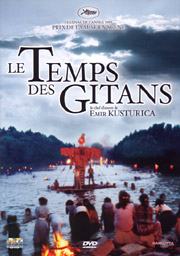
Time of the Gypsies

A film by Emir Kusturica

Inspired by a report published in 1985 on the kidnapping of one hundred children, all Roma, by Yugoslavs who sold them to Americans and Italians, Dom za vesanje is the story of an orphaned boy who leaves his home and falls prey to ruthless exploiters of children.

Perhan is an idealistic young man who is adept at telekinesis. He lives just outside of Skopje with his grandmother Hatidja, his uncle Merdjan and his sister Danira, who suffers from a bone disease. The film strongly emphasises the traditional values of Romani culture personified by the warm and caring grandmother whose healing powers are well known to the village. The main theme of the film is the punishment meted out by the spirits to Perhan when he moves away from these values. Perhan is in love with a village girl named Azra but his attempts to marry her are rejected by her stern mother because he lacks money, uncharacteristically placing material wealth over spiritual values.

Determined to be considered worthy of marrying Azra, Perhan is easy prey for Ahmed, a criminal originally from the village, who has become rich by selling children to Italians and forcing them to beg and steal for him. Ahmed comes to Perhan's grandmother for help for his dying son and, when she restores his son to health, demands that Ahmed pay for a much needed operation for Danira. After he vows to pay for an operation and brings Danira and Perhan to Ljubliana, Perhan soon discovers his true way of life when Ahmed stops to collect young people along the way. The message that what appears good may be hiding darker intent is symbolised by Danira's vision of the spirit of her dead mother who has come to warn her of impending evil.

At first unwilling to earn money dishonestly, Perhan soon discards his idealism for the pursuit of money and goes into business with Ahmed, recruiting children for sale and putting beggars to work collecting money. In the process, Perhan becomes as ruthless and unforgiving as Ahmed when, after Ahmed suffers a stroke, he takes over the business. As Perhan continues to reject the values of his culture, where survival rests upon the adherence to core Romani values, he moves further away from the balance and so his misfortunes multiply.

A hauntingly beautiful, tragic and cautionary tale, replete with Romani symbolism and powerful soundtrack music by Goran Bregovic, featuring Ederlezi, the Romani name for the Feast of St George.