30 March 2008

Fanny and Alexander

A film by Ingmar Bergman

The story is a rich tapestry of one year in the life of a large and well-to-do theatrical family living in a Swedish provincial town at the turn of the century. The central characters are two young children, Fanny and Alexander, whose lives are turned upside down when their father dies and their mother, Emilie, falls for the icy charms of the puritanical local Bishop.

Much to the concern of their grandmother, the children are mistreated under the Bishop's strict regime and Emilie is powerless to act. But, to the children's rescue comes an old family friend, in whose magical and mysterious emporium Alexander encounters supernatural forces which contribute to the family's eventual reunion. An optimistic and enchanting evocation of childhood, Fanny and Alexander is, without doubt, Bergman's masterpiece, described by him as being the sum total of his life as a filmmaker.

27 March 2008

Dancing at Lughnasa

A film by Pat O'Connor

It is the summer of 1936 and Europe is on the verge of terrible change. But far removed from the frightening violence, the Mundy family are sheltered in their close-knit home in Ballybeg, Donegal. Michael, the illegitimate son of the youngest sister, feels the joy and security of his family, but when his father comes home, the cracks begin to show. Secrets and sorrows break through the happiness and repressed passion is unleashed. Lingering below the surface lie concealed anxieties which will tear their world apart and change the Eden of Ballybeg forever.

As a man, Michael is called again and again to the summer that eclipsed the Mundy sisters. Memories of Uncle Jack and his waking dreams of Africa. Memories of those wonderful sisters; the abandon with which they loved him and each other. And images from that night, when they joined together to capture the light and the dance within themselves. It was as though they were the last altar of the Lughnasa fires before the flames must go out. For Michael, that sweet music created by the Mundy sisters would forever echo in his life.

The memory of that summer is like a dream to me. A dream of music that is both heard and imagined, that seems to be both itself and its own echo. When I remember it, I think of it as dancing. Dancing as if language had surrendered to movement. Dancing as if language no longer existed, because words were no longer necessary.

23 March 2008

Straw Dogs

A film by Sam Peckinpah

David Sumner is a quiet American mathematician who has moved with his wife Amy back to a remote Cornish farmhouse near the village where she grew up. The couple have relocated to rural England in an attempt to flee the violence of America but their placid life is brutally interrupted when the savagery and violence they sought to escape engulfs them and threatens to destroy their lives.

When released in 1971 this film caused outrage and controversy among critics and was for many years banned from home viewing. It still seems to be considered one of the most disturbing films ever made. Peckinpah's choice of location was the village of St Buryan in west Cornwall, used for the exterior shots. While a number of its inhabitants served as extras, no-one in the village was told anything about the story or its violent nature when the film unit were working there, so this came as an unpleasant shock for most on seeing the completed movie.

The farmhouse where the couple live, Trencher's Farm in the story, is situated near Morvah on the north coast of West Penwith. It is called Solomon's Island (or Isle) but is known also as Tor Noon, the name of a nearby natural feature. It was used for the exterior shots of the farmhouse and its surrounding countryside.

17 March 2008

La fille aux yeux d'or

A film by Jean-Gabriel Albicocco

Paris in 1960. Henri Marsay is a rich play-boy who runs a fashion agency. One of the pleasures in which he likes to indulge, with the aid of a circle of accomplices, is to capture more or less consenting young women. But then he meets a beautiful and mysterious woman, an enchanting and capricious young girl with golden eyes, who has been secretly following him.

He photographs her and she captures his interest immediately, but while her interest in him is very apparent, she is also unforthcoming and secretive. Henri becomes obsessed with both her beauty and her mystery, soon realising that she is not just another conquest but that he is falling in love with her. However, despite his attempts to discover who she is, her identity remains a mystery.

After some time Henri begins to understand that the girl with whom he has fallen in love is actually the lesbian partner of the jealous and possessive Eléonore, his mistress and associate in the fashion agency, who keeps her in a life of elegant baroque luxury. The strange, complex and unstable love triangle that ensues cannot be sustained as possession becomes the ultimate object of desire.

Director Jean-Gabriel Albicocco's film, released in 1961, is a modern adaption of the story by Honoré de Balzac based on the rivalry of heterosexual and homosexual love. The scenery and symbolism he uses, with the film's striking black-and-white images, combine to accentuate the mood of mystery and muted perversity, in an almost overwhelming sense of the romantic. Marie Laforêt was to become known as la fille aux yeux d'or throughout her long career as an actress and singer.

14 March 2008

Paris, Texas

A film by Wim Wenders

Paris, Texas is probably Wim Wenders' most well-known, critically acclaimed, and successful film, winning a number of international prizes including the Cannes Palme d'Or for Best Film of 1984. This unusual road movie, tells the story of Travis, a man lost in his own private hell. Presumed dead for four years, he reappears from the desert on the Mexico border, world-weary and an amnesiac. A doctor traces his brother Walt who is bringing up Hunter, his seven-year-old son, Travis's ex-wife Jane having abandoned the child at Walt's door several years before. As virtual stangers, Hunter and Travis begin to build a wary friendship and conspire to find Jane and bring her back to be a real family.

The film's wonderfully slow pace and one-to-one dialogues capture the essence of relationships where people have become rather more than strangers to each other. As the story progresses each gradually learns more of the others' recent past and thus attempts to find their place within a new and unexpected context. The soundtrack music by Ry Cooder perfectly expresses the film's sun-bleached landscapes and melancholy undertones.

10 March 2008

Spring, Summer, Autumn, Winter ...and Spring

A film by Kim Ki-duk

This exquisitely beautiful and very human drama, filmed in Korea and starring director Kim Ki-duk, is entirely set on and around a tree-lined lake where a tiny Buddhist monastery floats on a raft amidst a breath-taking landscape. The film is divided into five segments with each season representing a stage in a man's life.

Under the vigilant eyes of Old Monk, Child Monk learns a hard lesson about the nature of sorrow when some of his childish games turn cruel. In the intensity and lushness of summer, the monk, now a young man, experiences the power of lust, a desire that will ultimately lead him, as an adult, to dark deeds. With winter, strikingly set on the ice and snow-covered lake, the man atones for his past actions, and spring starts the cycle anew.

With an extraordinary attention to visual details, such as using a different animal (dog, rooster, cat, snake) as a motif for each section, writer/director/editor Kim Ki-duk has crafted a totally original yet universal story about the human spirit, moving from Innocence, through Love and Evil, to Enlightenment and finally Rebirth.

7 March 2008

Himalaya

Himalaya: l'enfance d'un chef
a film by Éric Valli

In a village of the Dolpo, high in the Himalaya, a proud old chieftain, Tinle has just lost his eldest son, Lhakpa. Tinle accuses Karma, the leader of the young Dolpo-pa for the death of his son and refuses to grant permission to Karma to lead the annual yak caravan, which journeys across the mountains to exchange salt for grain.

Karma decides to challenge Tinle by leading the young villagers and their yaks before the date set by ancient ritual. Determined to keep his leadership, Tinle leads a second caravan on the ritual date, choosing a shorter but more dangerous route in order to gain time. Accompanying Tinle is his second son, Norbou, a monk and painter; his grandson and future Dolpo chieftain, Passang; the boy's mother, Pema; and the other elders of the village. The journey becomes an ancestral duel and a struggle ensues between man and nature in the heights of the Himalaya.

Shot entirely on location in the Dolpo region of Nepal at altitudes of over 5,000 metres, the film features the most incredible high mountain scenery, especially around the stunning Lake Phoksundo. This is one of the most dangerous passages the caravan needs to make and is accompanied by the powerful and very beautiful chanting of the Green Tara mantra, calling on her to quickly come to their assistance.

Éric Valli is an award-winning writer, photographer and filmmaker who is a specialist on the Himalaya.

4 March 2008

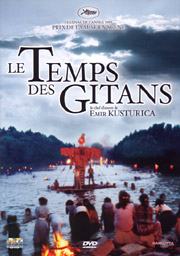
Time of the Gypsies

A film by Emir Kusturica

Inspired by a report published in 1985 on the kidnapping of one hundred children, all Roma, by Yugoslavs who sold them to Americans and Italians, Dom za vesanje is the story of an orphaned boy who leaves his home and falls prey to ruthless exploiters of children.

Perhan is an idealistic young man who is adept at telekinesis. He lives just outside of Skopje with his grandmother Hatidja, his uncle Merdjan and his sister Danira, who suffers from a bone disease. The film strongly emphasises the traditional values of Romani culture personified by the warm and caring grandmother whose healing powers are well known to the village. The main theme of the film is the punishment meted out by the spirits to Perhan when he moves away from these values. Perhan is in love with a village girl named Azra but his attempts to marry her are rejected by her stern mother because he lacks money, uncharacteristically placing material wealth over spiritual values.

Determined to be considered worthy of marrying Azra, Perhan is easy prey for Ahmed, a criminal originally from the village, who has become rich by selling children to Italians and forcing them to beg and steal for him. Ahmed comes to Perhan's grandmother for help for his dying son and, when she restores his son to health, demands that Ahmed pay for a much needed operation for Danira. After he vows to pay for an operation and brings Danira and Perhan to Ljubliana, Perhan soon discovers his true way of life when Ahmed stops to collect young people along the way. The message that what appears good may be hiding darker intent is symbolised by Danira's vision of the spirit of her dead mother who has come to warn her of impending evil.

At first unwilling to earn money dishonestly, Perhan soon discards his idealism for the pursuit of money and goes into business with Ahmed, recruiting children for sale and putting beggars to work collecting money. In the process, Perhan becomes as ruthless and unforgiving as Ahmed when, after Ahmed suffers a stroke, he takes over the business. As Perhan continues to reject the values of his culture, where survival rests upon the adherence to core Romani values, he moves further away from the balance and so his misfortunes multiply.

A hauntingly beautiful, tragic and cautionary tale, replete with Romani symbolism and powerful soundtrack music by Goran Bregovic, featuring Ederlezi, the Romani name for the Feast of St George.

27 February 2008

Zhou Yu's Train

A film by Sun Zhou

Zhou Yu is an artisan living in Sanming, an industrial town in north-western China. Twice a week, she takes the train to rural Chongyang to visit her lover, a shy, handsome poet named Chen Qing. Inspired by Zhou Yu's beauty, Chen has crafted a series of poems for her, which has only drawn her closer to this quiet, gentle man.

United by their passion, he finds in Zhou Yu the ultimate muse, while she believes Chen to be her ideal soul-mate. Zhou Yu returns to the countryside again and again to sate her restless heart but on one journey to see him, she encounters a friendly young veterinary surgeon, Dr Zhang Qiang, who becomes an eager suitor, younger and much more worldly than the sheltered Chen. Zhou Yu has begun to realise that despite their passion, Chen does not know what kind of future he wants with her.

Although Zhang's intentions are clear, Zhou Yu embraces him as a trusted friend, telling him of her last encounter with Chen who has decided to take a teaching post in Tibet, effectively putting their relationship on hold. But after Chen Qing leaves for Tibet, and like the train she continues to ride twice a week, Zhou Yu is inevitably drawn back to Chongyang to the empty library, her heart frozen as she tries to contemplate her betrayal.

In the mountains of Tibet, a young woman named Xiu arrives. She has fallen in love with Chen Qing through his poems, and has been pursuing him and watching Zhou Yu to understand the inspiration behind the poetry. Chen tells her that Zhou Yu is dead, killed in a bus accident on her way to Tibet. But Xiu isn't convinced – now, she is the one riding the trains in pursuit of her love, and she can see Zhou Yu riding with her.

This beautifully made film is a passionate tale of one woman's search for perfect love. A sensual evocation of distance and time, reality and imagination, where the only thing that's truly real is what's in one's heart.

24 February 2008

Trois couleurs: Rouge

A film by Krzysztof Kieślowski

Three Colours: Red is the third part of Kieślowski's trilogy which explores the French Revolutionary ideals of Liberty, Equality and Fraternity.

Red is the story of Valentine, a young fashion model living in Geneva. One night in her car she runs over a dog. The accident leads her to a meeting with its owner, a retired judge – cynical, embittered and living in isolation, who eavesdrops on his neighbours' private telephone conversations.

In exploring the theme of fraternity, the film focuses on the relationships between Valentine and the many people whom her life touches. Some who may not be aware of the connection they have with her, or with the old judge; some whose lives parallel situations that have happened before. All these seemingly separate lives are anonymously, yet inextricably linked to Valentine – who, through her altruistic nature and selfless actions, brings compassion, forgiveness and redemption.

In the final scene we discover how Valentine's destiny can also unite these apparently unconnected and coincidental relationships.

23 February 2008

Trois couleurs: Blanc

A film by Krzysztof Kieślowski

Three Colours: White is the second part of Kieślowski's trilogy which explores the French Revolutionary ideals of Liberty, Equality and Fraternity.

White is the story of Karol, a Polish hairdresser who has won several international awards. He has married a beautiful French model, Dominique, and come to live with her in Paris. Karol loves his beautiful wife to obsession but she is divorcing him for his inability to consummate their marriage.

Dominique humiliates Karol and reduces him to the life of a homeless métro beggar where he meets fellow countryman Mikolaj, who helps him return to Warsaw to start afresh. There Karol begins rebuilding his material life from nothing, whilst fighting to resolve his deep passion for Dominique and plotting his revenge to achieve equality – only to have his final triumph eclipsed in an unexpected way.

22 February 2008

Trois couleurs: Bleu

A film by Krzysztof Kieślowski

Three Colours: Blue is the first part of Kieślowski's trilogy which explores the French Revolutionary ideals of Liberty, Equality and Fraternity.

Blue is the story of Julie who loses her husband, Patrice, an acclaimed European composer, and her young daughter in a car accident. The film's theme of liberty is manifested in Julie's attempt to start life anew free of personal commitments, belongings, grief and love.

She withdraws from the world to live completely independently, anonymously and in solitude in the Parisian metropolis. Despite her intentions, people from her former and present life intrude with their own needs. However, the reality created by the people who need and care about her, the surprising discovery of her husband's mistress, Sandrine, who is carrying his child, and the music around which the story revolves, heals Julie and irresistibly draws her back to her true self, from where her life can once more move forward.

18 February 2008

La double vie de Véronique

A film by Krzysztof Kieślowski

Véronique and Weronika are two young women leading totally separate lives in France and Poland, yet each strangely aware of the other's presence. Despite their different backgrounds, the two share not only many of the same likes, foibles and prodigious musical talents, but also the same wisdom, inspiring one to unconsciously avoid making the same mistakes in life as the other.

Weronika embraces each aspect of her life with zeal. She has many friendships, sexual and platonic, and a variety of interests. A serious heart ailment, however, debilitates her periodically, but she refuses to let it hold her back. On her way to a singing contest, she sees a woman who is her physical double. Weronika tries to catch the look-alike's attention, but fails.

The second woman, Véronique, is also a gifted singer yet she rejects this talent to teach at a primary school. Eventually she, too, senses the presence of another force in her life, but it isn't until Alexandre, a writer and puppeteer, appears that she finally recognises this for certain.

A transcendent, lyrical and enigmatic tale of duality and yearning.

11 February 2008

The Cave of the Yellow Dog

A film by Byambasuren Davaa

A Mongolian nomad family find themselves in disagreement when the eldest daughter, Nansal, befriends a dog and brings it home. Believing that it is responsible for attacking his sheep, her father refuses to allow her to keep it. When it's time for the family to move on, Nansal must decide whether to defy her father and take her new friend with them.

Directed by Byambasuren Davaa, herself of Mongolian birth, the film also documents a land and its people in change – the ongoing topic of urbanisation and the existential changes that the nomads are facing. It follows the fascinating life of the self-sufficient nomad family with its animal herds, and in particular deals with their great spirituality and Buddhist belief, both of which have an influence on their harmonious connection with nature and the belief in reincarnation. In making the film Byambasuren shows authentic details of the everyday life of a nomad family, placing particular value on showing the dismantling of a nomad yurt in detail, and the integration of children's games in the story.

The Cave of the Yellow Dog is a thought-provoking mix of documentary and drama that tells the story of the age-old bond between man and dog, a bond which experiences a new twist through the eternal cycle of reincarnation in Mongolia.

8 February 2008

Les filles du botaniste

A film by Dai Sijie

In 1980s China many taboos still remain, despite the death of Mao Zedong. Li Min, a young Chinese-Russian orphan, leaves to study with a renowned botanist. A secretive man and an authoritarian father, the professor lives on an island that he has turned into a luxuriant botanical garden. Forced to lead a solitary existence and treated much like a servant, his daughter Cheng An gladly welcomes the arrival of the new student. Soon the two young women find their friendship developing into an attraction that is compelling, sensual and forbidden. Incapable of separation, An and Min then discover they have created a dangerous situation in order that they may continue to spend their lives together.

A very beautiful, romantic and poignant film, made with a sensitivity that captures the essence of forbidden love. The story contrasts the innocence of a desire for happiness which harms no other, with the prejudices and disapproval of a society which fears non-conformity. The filming locations in Vietnam (unfortunately Dai was refused permission to shoot in China) provide the most stunning visuals, whilst the cinematography is just breathtaking and the musical score hypnotic.

5 February 2008

The Red Violin

A film by François Girard

Nicolo Bussotti is a 17th century master craftsman who creates the perfect violin for his unborn child. A tarot reading given for Anna, his pregnant wife, predicts not the future of her own life, as is at first understood, but instead that of the violin in which her spirit resides. When both the child and his mother die during childbirth Bussotti is obsessively compelled to finish making the instrument.

The story begins in present-day Montréal where the violin is to be auctioned. The sale has attracted the attention of musicians and collectors worldwide, and as the bidding commences, the history of this unique instrument is gradually revealed to us. Beginning its life in Cremona, Italy in 1681, the violin travels across continents, cultures and centuries – to Vienna, Oxford, Shanghai and finally to Canada – inspiring love, passion, obsession, betrayal and sacrifice in every life it touches.

Girard's episodic technique of using different periods and cultures does not result in just a chain of separate stories, but allows for a larger frame of reference, making the film's message resonate more widely. What becomes more important is not the differences between the episodes, but the similarities, the recurring motifs and themes which bind the varying strands together. What emerges is a film about survival in adversity; it is a tribute to the universal and enduring pleasure that music provides when all around is destruction and pain. A beautifully told tale of romance, adventure and intrigue.

23 January 2008

Le Grand Meaulnes

A film by Jean-Gabriel Albicocco

Le Grand Meaulnes (The Lost Domain) is one of the greatest French novels of the 20th century, the only novel of Alain-Fournier, a brilliant young writer killed in action in 1914 at the age of twenty-seven.

The story is a masterly exploration of the twilight world between boyhood and manhood, with its mixture of idealism, realism, and sheer caprice. But that is not its only magic – there is a magic of setting, of narrative, of the abject beauty of the heroine, of the inexplicable elusiveness of the 'lost domain' itself.

One night, at a party in a strange domain lost in the woods, Augustin Meaulnes is dazzled by the beauty of Yvonne de Galais, with whom he falls eternally in love. But when the party ends, the young woman seems to have vanished along with the château and its people, as if it had all been a dream fantasy. Despite the passage of time, Augustin Meaulnes will never regain the beautiful apparition.

The original film adaption by Jean-Gabriel Albicocco, released in 1967 and starring Brigitte Fossey, Jean Blaise and Alain Libolt, is a masterpiece of French cinema. Visually intensive throughout, the camera captures especially well the surrealistic experience at the mysterious party in the château into which Augustin stumbles, as in a dream.

21 January 2008

Balzac and the Little Chinese Seamstress

A film by Dai Sijie

Based on the semi-autobiographical novel Balzac et la petite tailleuse chinoise by Dai Sijie, the story centres on two boys, Luo and Ma, university students from bourgeois backgrounds who are sent to a remote mountain village in Sichuan province for three years of re-education during the Cultural Revolution. Amid the physical and intellectual hardships they are forced to endure, both fall in love with a beautiful local girl, granddaughter of an old tailor and known to everyone as the Little Seamstress.

During these years of intellectual oppression, the three find solace and liberation in a secret cache of forbidden books by classic Western authors, among whom their favourite is Honoré de Balzac. In attempting to woo the Little Seamstress and to teach her of things she had never imagined, the students start a journey that will profoundly change her perspective on her world and theirs. An evocative and luminously shot paean to a time long past and to the realisation that change can bring freedom.

17 January 2008

The Remains of the Day

A film by James Ivory, based on the novel by Kazuo Ishiguro.

James Stevens, a meticulous and emotionally repressed man, is butler to Lord Darlington. His master is one of a number of misguided aristocratic diplomats who are trying to cultivate ties with the Nazi cause in post-WWI Britain. But Stevens's world of manners and decorum in the household he maintains is tested by the arrival of a new housekeeper, Miss Kenton, a high-spirited, strong-minded young woman who watches the goings-on upstairs with horror. Despite her apprehensions, she and Stevens gradually fall in love, though neither will admit it, and only give vent to their charged feelings via fierce arguments. Unfortunately, loyalty to his master causes Stevens to reject the delicate advances of Miss Kenton who eventually marries and moves away.

As the film opens in the 1950s, Stevens, now in the employ of a new master, reviews a lifetime of service at Darlington Hall. Realising his past mistakes and the wasted opportunities in his life, he contacts Miss Kenton in the hope of bringing her back to the house, and thus once more into his life.

A story of misguided loyalty, pride, and unrequited love. The tragedy of a man who pays the terrible price of denying his own feelings.

15 January 2008

The Hours

A film by Stephen Daldry, adapted from the Pulitzer Prize winning novel by Michael Cunningham. Its name was also Virginia Woolf's working title of her novel Mrs Dalloway on which the story is based.

"Mrs Dalloway said she would buy the flowers herself."

In 1920s London, Virginia Woolf is fighting against her rebellious spirit as she attempts to make a start on her new novel, a book which will set a trend in contemporary literature, the stream-of-consciousness novel.

Laura Brown, a young wife and mother, broiling in a suburb of 1940s Los Angeles, yearns to escape and read her precious copy of Mrs Dalloway, finding it so revelatory that she begins to consider making a devastating change in her life.

Clarissa Vaughan, a present-day version of Woolf's Mrs Dalloway, steps out of her smart Greenwich Village apartment in 1990s New York to buy flowers for a party she is hosting for a much loved friend who is dying of AIDS.

The Hours recasts the classic story of Woolf's Mrs Dalloway in a startling new light. Moving effortlessly across the decades and between England and America, this exquisite story follows the personal worlds of three unforgettable women. Their engaging stories intertwine until they come together in a surprising moment of shared recognition.

Dear Leonard —
To look life in the face
Always, to look life in the face
And to know it for what it is
At last, to know it
To love it for what it is
And then, to put it away

Leonard,
Always, the years between us
Always, the years
Always, the love
Always, the hours